- 
 - 
 - 
 - 


 - 


Maritime Medical Examination in Georgia Without a Queue. Special Conditions for Seafarers from Ukraine, Russia and Belarus

25 years of experience, P&I Club certificates, yellow fever vaccination, special offers for seafarers from other countries: transfer service, accommodation search, discounts on certificates in partner training centers, employment assistance through Georgian crewing companies.

TOP European Marine Training Centres. Where to go When Certificates Expire?

Every five years the command staff is required to change certificates and update the package of documents for further work. Ratings need to improve their qualifications to move up the career ladder. But what to do if you now live in Europe and there is no opportunity to undergo training in a Ukrainian TC?


From STCW to Smart Ships: Where Seafarers Train in Greece – Part 5
Greece is one of the key countries in the global maritime industry, home to a large concentration of shipowners, crewing companies, and training centers for seafarers.
That's why we've dedicated a separate feature to Greek maritime training centers—places where seafarers can complete their training, renew certificates, and gain new knowledge, including in the areas of smart ships and emerging technologies.
Sea, Separation and Sexuality: What Happens to a Seafarer During a Long Voyage.

When people speak about the psychological challenges of working at sea, they usually think of stress, fatigue, sleep disturbances and loneliness. The intimate side of a long voyage is discussed far less often. Yet sexuality is not merely a matter of physiology. It is influenced by a person’s emotional state, their relationship with a partner, prolonged separation and the eventual return home.


Sharks Equipped With Sensors Could Help Predict Hurricane Intensity

13.08.2026
2181
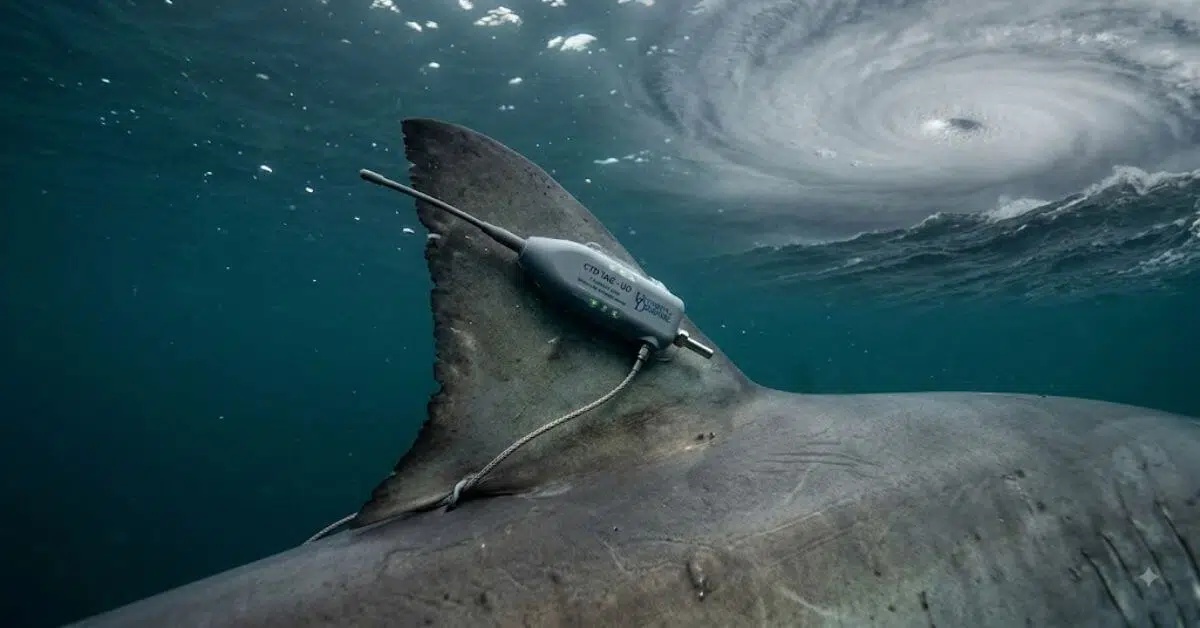
 
Researchers at the University of Delaware are tagging sharks with small devices that measure temperature, depth and electrical conductivity, which is closely linked to salinity.
 
Ocean conditions can affect how strong a hurricane becomes. Researchers are especially interested in the heat stored in the ocean’s upper mixed layer, which provides energy to hurricanes.
 
Sharks naturally move through different depths and parts of the ocean, giving researchers a possible way to collect data in places that are difficult to monitor regularly.
 
The CTD tags attached to the sharks record temperature, depth and conductivity. As the sharks dive and swim, the sensors collect measurements from different depths.
 
The information is transmitted to satellites when the shark’s dorsal fin reaches the surface. The tags can then send the collected data along with the shark’s GPS location to researchers.
 
Scientists  examined 11 shark species to find which ones were most suitable for carrying the sensors.
 
Shortfin makos and blue sharks ranked highest because they surface often enough to give the tags opportunities to connect with satellites.
 
The tagging work takes place about 30 to 40 miles (50 to 65 km) offshore. Researchers travel on a research vessel, put baited lines into the water and usually wait two to three hours for a shark to take the bait.
 
Once a suitable shark is caught, the tag is attached to its dorsal fin. The procedure usually takes less than five minutes.
 
The work is carried out under institutional animal-care oversight. The tags are attached with materials designed to corrode and eventually fall off.
 
Source: Reuters, Maracoos


1
Share:


Confirm
Cancel

Confirm
Cancel


Yes
No